


If you’re a commercial property owner or investor looking to sell your space, you’ve probably already dug into all the usual factors that drive resale value—location, square footage, recent renovations, that killer rooftop patio everyone posts about. But what about the stuff that’s easy to overlook, like the stuff that keeps your building from burning down? I’ve spent over a decade working as a commercial fire rated door supplier, and I can’t tell you how many times I’ve heard property owners brush off fire safety features as “red tape” that doesn’t move the needle on value. Spoiler: that’s totally wrong. These days, commercial buyers aren’t just looking for a space that looks good—they’re looking for one that’s low-risk, compliant, and can save them from a huge financial headache if something goes wrong. Today, let’s break down exactly how commercial fire rated doors (yes, the actual ones I sell) impact resale value, and why skipping out on good ones could end up costing you big time when it’s time to sell.
First, let’s get one thing straight: fire rated doors aren’t just metal slabs that look a little sturdier than a regular office door. They’re tested and certified to slow or stop the spread of fire, smoke, and toxic fumes for a set amount of time—usually 1, 1.5, or 3 hours, depending on where they’re installed. Think about it: if a fire breaks out in a storage closet on the second floor, a fire rated door between that closet and the hallway can keep it from spreading to the rest of the building long enough for the fire department to show up. That’s not just a safety win—it’s a financial one, and buyers know that.
When a potential buyer walks through your property, the first thing they’ll do (after checking the parking and the break room) is ask for the building’s insurance and safety records. Insurance companies have strict rules about fire safety, and properties with non-compliant or low-quality fire doors almost always pay higher premiums. Higher operating costs = lower profit margins for the new owner, which means they’ll offer you less for the space. I see this all the time: a property in a mid-sized city comes to us, they’ve got outdated, unrated wooden doors in their stairwells, and their insurance is $15k a year. They upgrade to certified fire doors—like our Steel Fire Resistance Door—and suddenly their insurance drops by $4k a year. That’s $48k in savings over 10 years, and buyers will pay top dollar for a space that already has that lower operating cost baked in.
But it’s not just insurance. Local building codes are getting stricter every year, especially post-pandemic when fire safety has become a bigger priority for municipalities. If your property has fire doors that don’t meet current code standards, you can’t sell it without fixing them—full stop. I’ve had clients come to me last minute before a sale, panicking because their old building had stairwell doors that weren’t labeled with the right fire rating. The buyer’s inspector flagged it, and if we couldn’t install compliant doors in time, the sale would fall through. We ended up installing our Steel 36X80 Steel Fire Rated Door (perfect for standard stairwell openings) in 2 days, and the sale went through without a hitch. If we hadn’t had those doors ready to go, that client would have lost a $200k sale over a set of $1,200 doors. That’s the kind of math buyers don’t ignore—they see compliance as non-negotiable, and non-compliance is a huge red flag that knocks down offers.

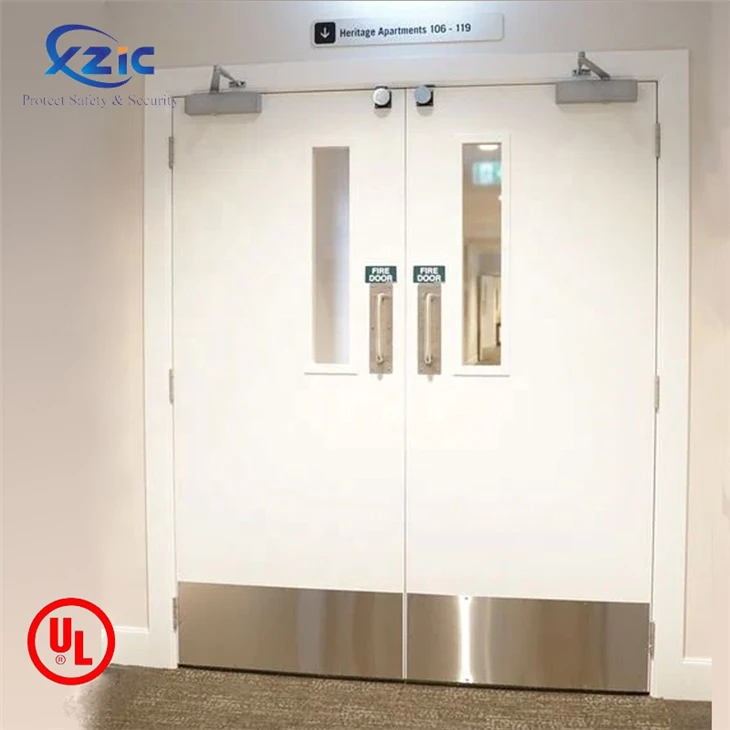
Another big one: liability. Commercial property owners get sued all the time, and fire-related lawsuits are some of the costliest. If a fire breaks out because your fire doors didn’t work, and someone gets hurt, or the building is a total loss, you’re on the hook. Buyers know that, so they’re willing to pay more for a space with fire doors that are UL-listed—meaning they’ve been tested by Underwriters Laboratories, the gold standard for safety certifications. Our UL Steel Fire Door isn’t just a door that passes a test once; it’s tested every batch to make sure it meets exact standards for heat resistance, smoke sealing, and structural integrity. A few years back, a restaurant property I worked with had a grease fire in the kitchen. The fire door we installed between the kitchen and dining area held for 2 hours, so the dining area and the adjacent office space were totally untouched. The insurance covered the kitchen, and the owner was able to keep the rest of the business open. When they sold the building a year later, the buyer specifically asked about that UL-listed door because they were opening a similar restaurant and didn’t want to risk closing for weeks if a fire broke out. They offered 10% over the asking price, in large part because of that one door.
Wait, let’s talk about curb appeal too—yes, really. Commercial property buyers want spaces that look professional and well-maintained, and fire doors don’t have to be the ugly, clunky things they used to be. Our fire doors come in different finishes, from standard primed steel to powder-coated colors that match your building’s exterior or interior design. Our UL Steel Fire Door And Frame set has a smooth, modern look that fits in with any commercial space, whether it’s a retail store, office building, or warehouse. When you have nice-looking fire doors, it doesn’t feel like you’re cutting corners on safety—it feels like you’re investing in the property’s long-term value. I’ve had buyers tell me they walked away from a similar property because their fire doors were dented, rusted, and clearly not maintained. They said it made the whole building feel neglected, even if the rest of the space was nice. Don’t let a little dented door be the reason a buyer picks your competitor’s space over yours.
Now, let’s get into the numbers because I know you care about that. A 2022 study by the National Fire Protection Association (NFPA) found that commercial properties with certified fire doors had a 12-15% higher resale value than similar properties with non-rated or outdated doors. For a mid-sized commercial property worth $1.5 million, that’s an extra $180k to $225k in your pocket when you sell. That’s not chump change—that’s more than enough to cover the cost of upgrading all your fire doors, plus a few other nice improvements. And here’s the kicker: the return on investment (ROI) for fire doors is actually really high. Most steel fire doors last 20-30 years with basic maintenance, so when you install them, you’re not just adding value for the current sale—you’re adding value for the next owner too. That’s the kind of selling point that makes buyers feel good about writing a higher check.
But wait, what if you have an older building? A lot of commercial properties are historic, or in areas where the code is a little more lenient on older structures. But even then, upgrading your fire doors is still a smart move. Local codes might not force you to replace them, but buyers will still expect to see compliant, tested doors. I worked on a 1920s office building last year that was going up for sale. The original wooden stairwell doors were completely unrated, but the local code only required them to be “adequate for the time.” The buyer’s broker did a deep dive into safety records and told the owner that they’d lose at least 8% of the sale value unless they upgraded. We worked with them to install our Fire Rated Steel Hinged Door that matched the old building’s vintage aesthetic—they powder-coated it to look like the original wood, so it fit right in. The buyer ended up offering asking price, no deductions, because they didn’t have to spend more money upgrading doors after closing. That’s the kind of win-win we aim for.
I know what some of you are thinking: “Upgrading fire doors sounds expensive. Can’t I just get by with minor repairs?” Maybe, but here’s the thing: when you sell, the buyer will do a full inspection, and any little issue with your doors will be a negotiating point. They’ll ask you to lower the price, or credit them for repairs, or take on extra work after closing. I’ve seen owners hold off on replacing a few rusted door hinges, and the buyer’s inspector flagged it as a safety hazard, so the buyer knocked $50k off the offer. That’s way more than the cost of the new hinges and a fresh coat of paint. Investing now saves you money later.
Let’s also talk about something that’s been huge in the last few years: ESG (Environmental, Social, and Governance) standards. More and more buyers, especially large corporations and institutional investors, are prioritizing ESG when choosing properties. Fire safety falls under the “Social” pillar of ESG— it’s about protecting people, employees, customers, and the community. Properties with proper fire rated doors have better ESG scores, which means they’re more attractive to these big buyers. A higher ESG score can translate to a higher sale price, because these buyers are often willing to pay a premium for properties that align with their values. Fire doors are one of the easiest, most cost-effective ways to improve your property’s ESG standing.
So, putting this all together: if you’re planning to sell your commercial property, upgrading your fire rated doors isn’t just a box-ticking exercise for safety—it’s one of the best investments you can make to boost your resale value. You’ll lower insurance costs, avoid code-related delays or deductions, reduce liability risks, improve curb appeal, and attract buyers who are willing to pay more for a safe, compliant, well-maintained space.
If you’re ready to get started, I’m here to help. We work with commercial property owners, brokers, and developers to find the right fire doors for every space, whether you need standard sizes like our Steel 36X80 Steel Fire Rated Door, UL-certified doors for high-risk areas, or custom finishes to match your building’s style. Our team can walk you through the local code requirements, give you a no-obligation quote, and even coordinate installation around your schedule so you don’t miss a sale deadline. Just reach out, and we’ll help you make sure your fire doors aren’t just keeping your building safe—they’re putting more money in your pocket when you sell.
References
National Fire Protection Association. (2022). Commercial Property Resale Value and Fire Safety: A Market Analysis. Quincy, MA: NFPA.
Underwriters Laboratories. (2023). UL Fire Door Certification: Testing Standards and Benefits for Commercial Properties. Northbrook, IL: UL LLC.
Insurance Information Institute. (2024). Commercial Property Insurance Premiums and Safety Compliance. New York, NY: III.


