


Alright, let’s break this down like I’m chatting with you over coffee—because when it comes to commercial wood fire doors, this stuff isn’t just jargon, it’s what keeps people safe, right? I’m a commercial wood fire door supplier, so I’ve seen firsthand how easy it is for folks to get tricked by subpar products. Let’s cut through the noise and figure out exactly how to tell if a wood fire door actually meets safety requirements, no fancy textbook fluff.
First off, let’s get one thing straight: not all wood doors labeled “fire-resistant” are created equal. I’ve had customers come to me (check out my Wood Fire Resistance Door Supplier page for real deets) saying they grabbed a cheap wooden door from a local warehouse and thought it’d work for their office hallway. Spoiler: it didn’t, and now they’re facing code fines. So step one is to stop guessing and start verifying hard proof.
The Non-Negotiable: Third-Party Testing & Certification
Here’s the big one—any commercial wood fire door has to pass standardized fire tests, no exceptions. We’re talking tests that simulate real fire conditions: high heat, flame exposure, sometimes even structural stress from people trying to escape. The only way these tests count is if an independent, accredited lab does them—think UL, Intertek, or NFPA (National Fire Protection Association) not some random guy in a garage.
I can’t tell you how many times I’ve seen a door with a “made-up” certification stamp. Like, a sticker that says “fire rated” but no lab number attached. That’s a red flag. When you’re vetting a door, ask for the full test report, not just a label. And the lab number should be traceable—go to the lab’s website, plug it in, and confirm that exact door model was tested.
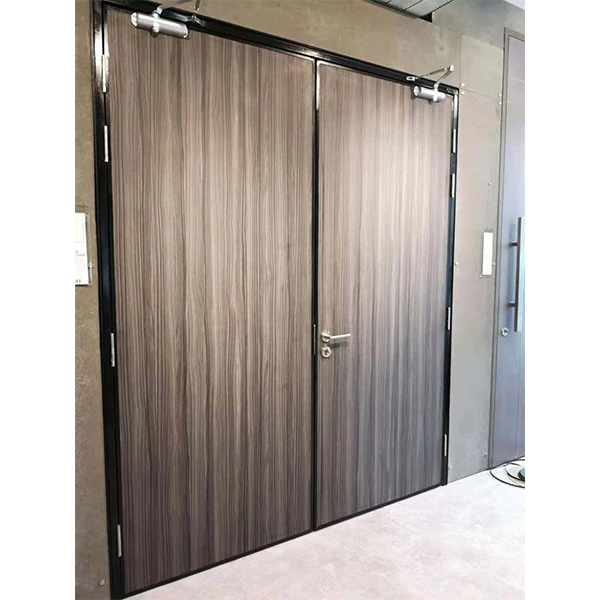

For example, a proper fire test will measure two key things: fire resistance rating (how long it can stop flames and heat—usually 20, 45, 90, or 180 minutes for commercial use) and thermal insulation (how much heat gets through to the other side). A lot of cheap wood doors skimp on the insulation, so even if they pass for 20 minutes, the other side gets too hot to touch, which is useless for protecting people. If you’re browsing options, check out our Fireproof Wooden Doors page for doors that have passed these exact tests.
Material Matters: It’s Not Just Plain Wood
You might think “it’s wood, it’s wood”—wrong. Commercial wood fire doors aren’t solid pine from Home Depot. They’re engineered with fire-resistant materials to slow down combustion. Let’s break it down:
- Core: The heart of the door. Most quality ones use a mineral core (like vermiculite or perlite mixed with fire-resistant binders) instead of hollow wood or low-density foam. That core is what stops the fire from spreading through the door. If a door’s core isn’t specified, walk away.
- Veneer: The outer wood layer is just for looks, but it has to be treated or bonded with fire-resistant resins. Regular wood veneer will char fast. We use a special bonded veneer that doesn’t catch fire as quickly—check out our Fire Rate Wood Door page to see how we balance aesthetics and safety here.
- Edges & Hardware: Wait, doors don’t work alone! The frame, hinges, and lock have to be fire-rated too. I’ve seen a door pass the test but its hinge melt in 10 minutes, making the door swing open and let flames through. So make sure every part—frame, hinges, even the door closer—is listed in the same test report. No mismatched parts allowed.
Code Compliance: Local vs. National Rules
Here’s another thing that trips people up: fire codes aren’t one-size-fits-all. A door that works for a small retail shop in Texas might not meet the requirements for a high-rise office in New York. That’s why you have to match the door’s rating to your local building code, and also the room’s use case.
For example, a stairwell door needs a higher rating than a closet door because people rely on it to escape. If you’re working with a commercial space, ask your local fire marshal for the specific rating you need. Then, when you’re looking at doors, confirm the rating matches that number. Our Wood Fire Rated Door Supplier team always helps clients match the right rating to their space—we don’t just sell a door and dip.
Also, some areas require doors to have a “positive pressure” feature? Wait, no, that’s more for smoke control. Oh right, smoke is a big killer in fires, not just flames. So check if your local code requires smoke ratings too. A lot of wood fire doors we supply (you can see them on our Wood Fire Proof Interior Door page) have both fire and smoke ratings, which is a win for most commercial interiors.
Red Flags to Watch For (That Aren’t on Labels)
Let’s get practical—what are the sneaky signs a door isn’t safe?
- No serial number or traceable certification: We put our serial numbers on every door so customers can look up exactly which test it passed. If a door doesn’t have that, it’s likely untested.
- Too good to be true pricing: A commercial 90-minute fire door shouldn’t cost the same as a regular interior door. The materials and testing cost money, so if someone’s selling a “fire-rated” door for $100, it’s a scam.
- Loose or flimsy hardware: Like I said earlier, hinges and locks have to be fire-rated. If the hardware is rusty or looks like it’s from a grocery store, that’s a problem. I’ve had clients try to reuse old hinges on a new fire door—don’t do that. Those hinges will fail in a fire.
- Missing intumescent strips: Wait, what’s that? Intumescent strips are the thin rubber-like strips around the door frame. When they get hot, they expand and seal the gap between the door and frame, so smoke and flames don’t slip through. If your door doesn’t have these strips, or they’re cracked, it’s not going to work when you need it most.
Why I Care (And How to Get the Right Door for You)
I’ve been a commercial wood fire door supplier for 8 years, and the scariest part is when a client cuts corners because they think “a door’s a door.” Last year, a small café in my area bought a cheap wood door for their kitchen exit. It didn’t have the right core, and when a grease fire started, the door charred in 5 minutes, trapping some staff. They didn’t get hurt, but they could have. That’s why I’m big on being transparent about what makes a door safe.
If you’re in the market for a commercial wood fire door, don’t just Google “fire door” and pick the first result. Ask for test reports, confirm the certification is third-party, check that all hardware is rated, and match the rating to your local code. We make this easy—our team will walk you through every step, no confusing jargon. You can reach out to our Wood Fire Rated Door Supplier team to ask questions or get a quote—we’re here to help, not just make a sale.
Final Thoughts
At the end of the day, determining if a commercial wood fire door meets safety requirements boils down to three things: verified third-party testing, proper fire-resistant materials (and matching hardware), and alignment with local fire codes. Skip the flashy labels, do your due diligence, and don’t be afraid to ask suppliers for proof. A fire door isn’t just a building component—it’s a safety net for everyone who uses your space.
If you need more info, or want to check out our actual tested doors, just look into our resources: Wood Fire Resistance Door Supplier, Fireproof Wooden Doors, Fire Rate Wood Door, Wood Fire Rated Door Supplier, and Wood Fire Proof Interior Door pages for all the details. We’re here to make sure you get a door that actually works when it matters.
References:
- National Fire Protection Association (NFPA) 80: Standard for Fire Doors and Other Opening Protectives
- Underwriters Laboratories (UL) 10B: Standard for Safety for Fire Tests of Door Assemblies
- Intertek Fire & Safety: Commercial Fire Door Certification Guidelines


