


As a UL steel fire door supplier, I’ve spent years working with building owners, facility managers, and contractors to understand one of the most common questions I get: “How often should UL steel fire doors be inspected?” It’s a question that matters because fire doors aren’t just metal panels—they’re life safety systems designed to contain fire and smoke, buying critical time for people to evacuate. Over the years, I’ve seen too many doors that were installed correctly the day they were built, only to become ineffective months or years later because of skipped inspections. The short answer isn’t one-size-fits-all, but it’s rooted in UL standards, industry best practices, and real-world use cases. Let’s break it down.

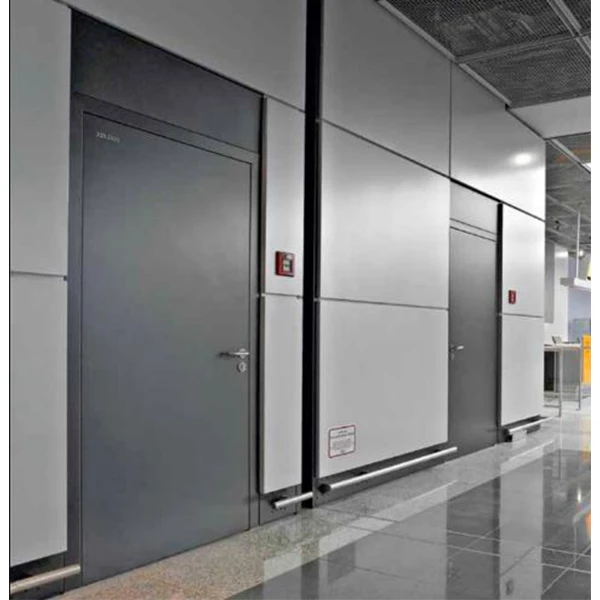
First, let’s start with what makes a UL steel fire door different from a regular door. When we manufacture doors that meet UL standards, they undergo rigorous testing to withstand fire for a specific duration—usually 20, 45, 90, or 180 minutes—when closed and latched. But that performance only holds if the door is maintained properly. Inspections are the way to catch small issues before they turn into big failures: a loose hinge, a damaged seal, a gap that’s too wide, or a self-closer that’s not working.
Many people assume that because the door is UL-listed, it never needs maintenance. That’s a dangerous myth. UL certification is for the door assembly when it’s installed correctly and in good condition, but wear and tear from daily use can compromise that. For example, a door used multiple times a day in a busy office building will experience more stress than one in a rarely accessed storage room, so its inspection needs will be different.
Let’s talk about the formal guidelines, because there are established standards here. The National Fire Protection Association (NFPA) is the go-to authority for fire door safety in the U.S., and their standard NFPA 80 is the bible for fire door installation, inspection, testing, and maintenance. NFPA 80 states that UL fire doors must be inspected “at least annually” but also adds critical context: high-risk locations need more frequent checks. What counts as high-risk? Areas with heavy foot traffic, industrial settings where doors might be bumped or damaged, healthcare facilities with 24/7 occupancy, and buildings with sprinkler systems that require door integrity to work alongside them.
As a supplier, I always advise my clients to tailor their inspection schedule to their specific space. For most commercial buildings, annual inspections are the minimum, but we recommend semi-annual checks for doors in high-traffic areas. For example, our 36X80 Fire Steel Door Prehung is often installed in corridor entryways of mid-rise apartments, where residents come and go daily—those doors need more frequent attention.
But what do these inspections actually entail? A proper fire door inspection isn’t just glancing at the door to make sure it’s closed. It covers several key areas: the door itself (no dents, holes, or paint covering the fire-rated core), the frame (no damage, gaps, or bent sections), hardware (self-closers, latches, hinges that are functioning correctly), and seals (intumescent or weatherstripping that’s intact and not cracked). Intumescent seals are especially important because they expand when exposed to heat, sealing gaps between the door and frame to prevent smoke and fire from passing through. If that seal is damaged, the door loses its ability to contain fire, even if it’s a UL-listed steel door.
I’ve had clients come to me with doors that were only inspected once every three years, and by then, the self-closer had broken, the hinge pins were rusted, and there was a half-inch gap at the bottom of the door—enough to let smoke spread through a whole floor. These are avoidable issues with regular inspections.
Now, let’s clarify a common mix-up: the difference between inspection and testing. Annual inspections, as required by NFPA 80, are visual and functional checks by a qualified professional. Full performance testing, which is sometimes confused, happens less frequently—usually every 3 to 5 years, depending on local codes. Testing involves closing the door, exposing it to a controlled heat source (not an actual fire, thank goodness), and verifying that it maintains its integrity. But inspections are the regular check-ins that catch problems before testing is needed.
Another factor that affects inspection frequency is the type of UL steel fire door you have. Doors like our UL Fire Rated Hollow Metal Door are designed for general commercial use, while Fire Resistant Door models with thicker cores might be used in higher-risk areas like server rooms or electrical closets. If you have a door in a location where it’s at higher risk of impact or damage, more frequent inspections make sense. For example, a door in a warehouse where forklifts operate is more likely to be bumped, so checking for dents or misalignment every six months is better than once a year.
I also want to mention that local building codes and fire marshal requirements can vary, so it’s always a good idea to check with your local authority having jurisdiction (AHJ) to make sure your inspection schedule meets their standards. Some areas might require inspections every six months for certain door types, while others follow the NFPA minimum of annual.
As a supplier, I often work with facility managers to help them create a custom inspection plan. For example, a school building has dozens of UL steel fire doors in hallways, stairwells, and mechanical rooms. We’d recommend semi-annual inspections for the hallway doors (high foot traffic) and annual for the mechanical room doors. A hospital, with its even higher occupancy and strict life safety requirements, might need quarterly inspections for doors near patient wings and emergency exits.
What happens if you skip inspections? Beyond the obvious risk of fire failure, there are real consequences. Non-compliance with NFPA 80 or local building codes can result in fines during fire inspections, and in the worst case, legal liability if a fire spreads because a door wasn’t maintained. I’ve seen this firsthand: a small office building fire a few years ago spread because a fire door’s self-closer had been broken for six months, so the door was left propped open. The facility manager had skipped the annual inspection and didn’t notice until it was too late.
Now, let’s talk about how to prepare for inspections. If you’re a building owner, make sure you have a record of your door installations, including UL certifications, so the inspector can verify that each door meets its listed rating. Our 6 Panel Steel Fire Door With Frame, for example, comes with full UL documentation that makes inspections faster and more accurate. Keep a log of past inspections, repairs, and replacements—this helps track wear over time and identify if a door is needing more frequent attention than originally planned.
Some facilities try to do their own inspections, and while a quick visual check is fine, I always recommend hiring a qualified fire door inspector. UL certification requires that inspections are done by someone trained and knowledgeable about fire door components, because small issues like a misaligned latch or a paint-covered hinge can be easy to miss for someone who isn’t familiar with fire door standards.
At the end of the day, the goal of UL steel fire door inspections is simple: to make sure that when an emergency happens, the door works as it’s supposed to. As a supplier, my job isn’t just to sell high-quality fire doors—it’s to help my clients keep them in good working order, so they fulfill their life safety purpose. The answer to how often to inspect isn’t just “once a year” or “twice a year”—it’s a schedule tailored to your building’s use, door type, and local codes.
If you need help assessing your current inspection plan, choosing the right UL steel fire door for your space, or learning more about maintaining your existing doors, feel free to reach out. We can walk you through the different UL-listed door options we offer, from our standard UL Fire Rated Hollow Metal Door models to heavy-duty Fire Resistant Door designs, and help you create an inspection schedule that meets your needs and keeps your building safe.
References:
- National Fire Protection Association. (2022). NFPA 80: Standard for Fire Doors and Other Opening Protectives. Quincy, MA: NFPA.
- Underwriters Laboratories Inc. (2023). UL 10B: Standard for Fire Tests of Door Assemblies. Northbrook, IL: UL.
- International Code Council. (2022). International Building Code (IBC). Country Club Hills, IL: ICC.


